
Your book’s back cover is its final sales pitch. For small and medium-sized publishers, this is where compelling copy, a strategic author bio, and professional design converge to secure a retailer’s order and a reader’s purchase. It’s a critical component of your go-to-market strategy, designed to close the deal.
Why Your Back Book Cover Is a Critical Sales Tool
Consider the retail environment, whether a physical bookstore or an online product page. The front cover grabs attention, but the back cover must convert that interest into a sale.
The Decisive Moment in the Buyer’s Journey
Picture a reader in a bookstore. They pick up a book, feel its weight, and almost instinctively flip it over. In these crucial seconds, they are actively seeking justification for the purchase.
- Is this story for me? The blurb must resonate with their genre expectations and personal tastes.
- Is this author credible? The bio must build authority and establish expertise.
- Is this a quality product? The overall design signals professionalism and publisher credibility.
A well-executed back cover doesn’t just summarize; it persuades. It transforms a book from an object on a shelf into an essential purchase.
The Enduring Power of Print
In a major North American market, an overwhelming 92% of readers read at least one print book in 2023. Furthermore, 79% of all books purchased last year were print copies. This deep loyalty to the printed page makes every square inch of your cover prime marketing real estate.
You can and the undeniable strength of print.
Writing Back Cover Copy That Sells Books
The back cover copy is your final, most direct communication with a potential buyer. Generic formulas are ineffective. The copy must be tailored to the book’s specific audience and genre.
Crafting a Blurb That Resonates
The blurb is the engine of your back cover—a sales pitch of approximately 150 words that must perform significant work. Its function is to intrigue, not to reveal the entire plot.
- For trade fiction, focus on the protagonist, their central conflict, and the stakes involved. Think of it as a cinematic trailer.
- For non-fiction, the blurb must clearly state the problem the book addresses or the central thesis it explores.
Building Credibility with the Author Bio
The author bio is a critical tool for establishing authority, particularly for non-fiction and academic titles.
- Academic and Professional Titles: Emphasize institutional affiliations, key publications, and professional awards.
- Trade Non-Fiction: Highlight the author’s unique qualifications—an investigative journalist’s award or an executive’s industry experience.
- Fiction Authors: The bio can be more personal to forge a connection. Mention acclaimed previous works or a compelling link to the story’s theme.
The most effective author bios are brief but potent. They don’t just list facts; they strategically build a case for the author’s authority and relevance to the reader.
Leveraging Testimonials and Endorsements
Social proof is a powerful sales driver. When selecting testimonials, prioritize relevance and recognition. An endorsement from a prominent figure within the book’s specific niche is often more effective than a generic quote from a well-known but unrelated personality.
Structuring Your Back Cover Layout for Commercial Impact
A back cover isn’t just about what you say; it’s about how the reader’s eye absorbs the information. The layout must create a clear, intuitive visual hierarchy.
Creating a Visual Hierarchy That Converts
The reader’s eye needs to be guided from the most compelling element to the call-to-action (the purchase). Here is the standard hierarchy:
- Endorsement or Tagline (Top): A powerful, bold quote or hook to grab attention immediately.
- Blurb (Centre): The core sales copy, easy to read with adequate spacing.
- Author Bio (Lower Centre): A concise, credibility-building paragraph.
- ISBN Barcode (Bottom Right): The essential commercial element, always in the standard lower-right position.
The Critical Role of White Space
White space is not wasted space; it is a powerful design tool. Overcrowding the back cover makes it feel cheap and difficult to read. Strategic use of white space creates breathing room, draws the eye to key elements, and conveys professionalism and confidence.
Technical Specifications for a Professional Finish
- Resolution: All graphical elements must be at least 300 DPI.
- Colour Profile: CMYK only. Use rich black (C=60, M=40, Y=40, K=100) for large areas; 100% K for body text.
- Bleed: 0.125 inches on all sides.
- Safe Margin: Keep all text and logos at least 0.25 inches from the trim edge.
Choosing Materials and Finishes for Maximum Impact
The tactile quality of a book is a significant, often subconscious, factor in the purchase decision.
Paper Stock Makes the First Impression
Coated stocks have a smooth surface ideal for art books or photography collections where colour fidelity is paramount. Uncoated stocks have a more natural texture, perfectly suited for literary fiction, poetry, or academic books.
Finishes: The Final Layer of Appeal and Protection
- Matte Lamination: A soft, non-reflective surface that feels elegant and modern.
- Gloss Lamination: High-shine, reflective finish that makes colours vibrant. Highly durable and scuff-resistant.
- Spot UV: A high-gloss coating applied to specific areas, creating striking contrast against a matte background.
- Embossing & Debossing: Physically raise or recess elements of the cover, adding a three-dimensional quality.
Your choice of finish is a direct reflection of your book’s brand. A durable gloss laminate on a textbook ensures it survives a semester, while a subtle deboss on a poetry collection adds quiet sophistication.
To explore the full range of possibilities, view our complete offering of .
Production FAQs for Publishers
What Are the Most Common File Rejection Errors?
The most frequent issues include incorrect bleed settings, low-resolution images (below 300 DPI), and colour profiles set to RGB instead of CMYK.
Pro Tip: Providing a technically sound file is the single best thing you can do to protect your production timeline.
How Does Binding Choice Affect Back Cover Design?
- Perfect-Bound Books: The back cover is part of a single continuous spread including front cover and spine.
- Case-Bound Hardcovers: The back cover is a separate board, and design must account for the turn-in area.
- Spiral or Coil Bindings: Require a generous margin on the binding edge to accommodate punched holes.
Should I Include the Price on the Barcode in North America?
Yes. In both the U.S. and Canadian markets, including the price on the barcode is an established industry standard that retailers require.
Can I Update the Back Cover for a Subsequent Print Run?
Absolutely. A second printing offers a perfect opportunity to add new review quotes, update the author’s bio, or adjust the price. Modern digital and on-demand printing technologies make these updates simple and cost-effective.
———
At Marquis Book Printing, we provide end-to-end manufacturing and logistics solutions that publishers across North America and Europe rely on.

Measure
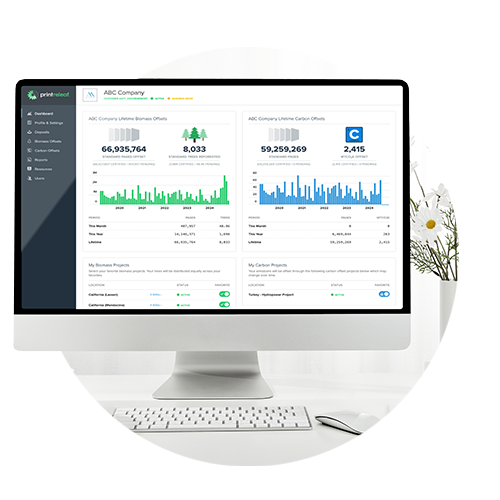
Calculate

Offset
This is a meaningful step forward in aligning our work with the values of today’s eco-conscious readers and helping publishers strengthen their sustainability leadership. We’re excited to lead the way and make it easier than ever to explore sustainable book printing!